
Avoiding a Failure Mode the Research Already Found
Some of the most useful research on rehab technology comes from documenting what went wrong in earlier systems, and those failures point directly at design decisions worth defending. In a Canadian study on VR physical rehabilitation for people living with dementia, researchers ran three rounds of rapid prototyping directly at the bedside, and found that some patients tried to interact with the system by pressing a controller trigger button, a reasonable instinct that the original design had not accounted for, which produced no response and led to visible confusion and frustration that pulled the patient’s attention away from the exercise (Matsangidou et al.). The fix in that study was not a software patch but a design principle: avoid interaction methods that invite an expectation of feedback the system is not built to give.
A separate documented case involving a voice-rehabilitation tool for patients with dysphonia found a related lesson from the opposite direction. The development team built a polished 3D prototype that was technically impressive, and the therapist working with them rejected it outright, explaining that her patients „are disable to understand this unintuitive game rule although it is uncomplicated” (Lv et al.). A design that looks sophisticated to an engineer can still be unusable to the patient it is meant to serve, and the only way to catch that gap reliably is to put a clinician in a position to say no before the design ships.
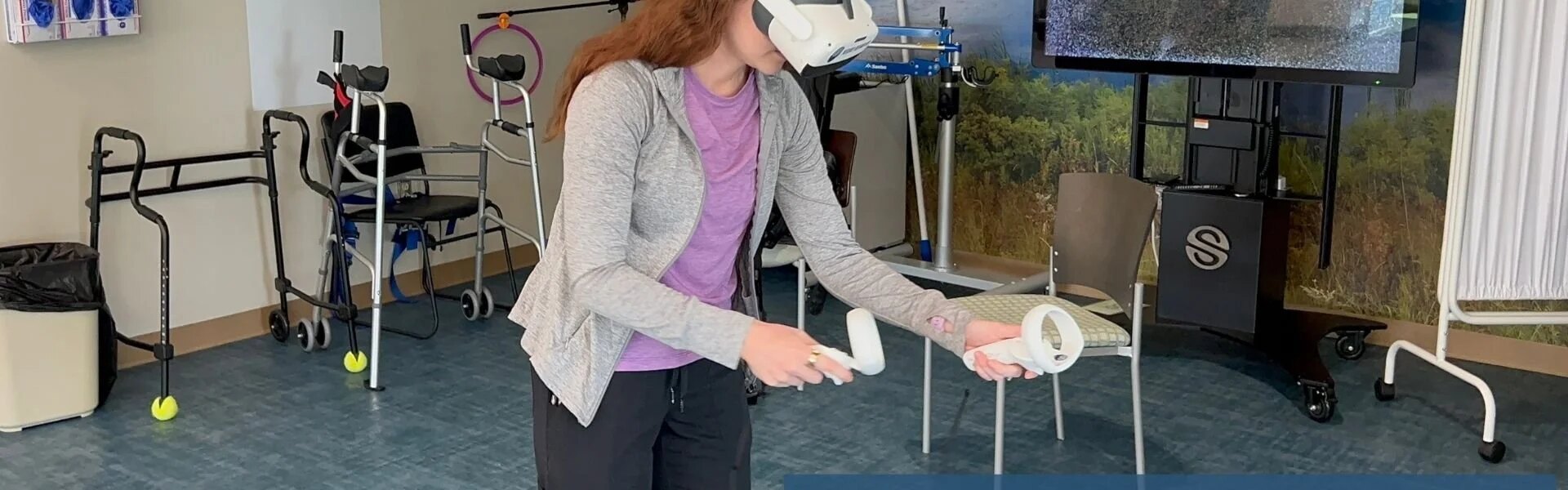
Keeping the therapist, rather than the patient, in control of the tablet interface is a direct answer to both of those documented failure modes. A patient wearing the headset is not asked to navigate a menu or interpret an unfamiliar control scheme mid-exercise, because the therapist is adjusting variables and content from the tablet in real time based on what they observe. The research above is exactly why that division of control matters, and it is why the interface was not designed the way a general consumer VR product would be.


